An Intersex Resource Bibliography: Navigating Herculine Barbin to the Present from an Intersectional Perspective
What is this project about?
Intersex people are those who are born with sex characteristics that do not match what sex they were assigned at birth, or what is typically considered “biologically” male or female. This is possible due to sex being a multilayered process––consisting of chromosomal, gonadal, reproductive, hormonal, and genital sex, just to name a few––that can be inconsistent across processes or levels. This means that __. Making up roughly 2% of the global population and consisting of more than 40 intersex variations, intersex people have been a “scientific phenomenon” for a very long time.
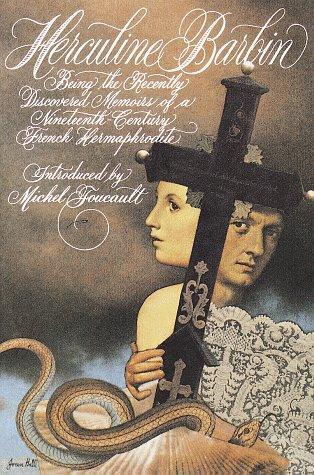
One such figure of interest has been Herculine Adélaïde Barbin, a 19th century French intersex woman who was legally reassigned as male during her adulthood. Twentieth century French philosopher and historian Michel Foucault published a collection in 1978 about Barbin, compiling and editing a copy of her memoirs, medical and legal documents, and press reports about her to study how sex has been medically pathologized in Western society.
Such a collection provided the origins of this project: a publicly available annotated bibliography which revisits Foucault’s work from a critical intersectional perspective, expanding our understanding of intersex lives and experience into the contemporary period. The bibliography has compiled literature from social psychology; gender, disability, and queer studies, as well as federal and conference reports to build an open-access bibliography through this exact website. It explores how the Western construction of sex, gender, and sexuality as a rigid binary has significantly harmed our understanding of and response to not only the historical case of Herculine Barbin, but also the contemporary intersex community as a whole today.
My hope is that this website will enable students, faculty, and the general public to better understand what intersexuality is, how the pathologization and socialization of sex has perpetuated the gender binary, and how Western medical, political, and social influences have stigmatized intersexuality across the globe.
Why make this collection?
On January 21, 2025, Trump signed an executive order stating that the United States government would only recognize two sexes: male and female. The socio-political repercussions this had on the queer community were immediate, from an increase of anti-trans bills and laws across the country to an increase in hate crimes and discriminatory behaviors towards trans and non-binary individuals.
However, less discussed was the impact this administrative decision had on the intersex community and their fight against non-consensual intersex surgeries—or procedures meant to align their natural bodies/genitalia to what is considered to be typically male or female. These surgeries are commonly performed on infants and children but are rarely mandatory for their health and well-being.
The lack of mainstream attention and discussion regarding intersex human rights issues overall, including the one mentioned just above, speaks to a larger pattern in terms of how the intersex community has been shunned and silenced both in society and academia. This includes Herculine Barbin, who has become a historical example of intersexuality and gender fluidity yet less is known about her particular life experiences nor how 19th century French society shaped them.
Because intersex individuals are not as frequently researched nor discussed, much of the context in terms of how intersex people have been politically, socio-culturally, and economically discriminated against gets lost. For that reason, the purpose of this collection is to educate students, faculty, and the general public about Herculine Barbin while connecting her experiences to contemporary, international ones.
How do I navigate this bibliography?
Within the header, you will find a menu where all sections of the bibliography can be found. If you ever find yourself stuck, you can always refer to the bibliography’s full outline within the “bibliographical sections” page. The order is as follows:
- Intro to Intersex
- Defines what it means to be intersex
- Introduce readers Audre Lorde’s Uses of the Erotic and Barbin’s memoirs
- Historical & Contemporary Examples
- Introduces US historical and contemporary global examples of intersex individuals
- Gender & Homosociality
- How the construction and socialization of gender as a binary made Herculine’s relationship with her partner Sara taboo after she was found to be intersex
- The Heterosexual Matrix & Colonialism
- How Western powers have used the Heterosexual Matrix to police bodies around the globe, shaping other cultures’ perspectives on sex, gender, sexuality, and intersexuality
- The Heterosexual Matrix’s Negative Consequences
- Exploration of the heterosexual matrix’s negative effects on the individual and communal level from a psychological, political-legal, and socio-cultural perspective
- Conclusion: Reimagining our Theoretical and Practical Future
- Some interdisciplinary theory that can help both individuals advocate for intersex rights from an intersectional lens and organizations practice intersectionality more intentionally through discourse production and coalition building
- Additional Sources
- Additional material that can expand on previous points and/or answers any questions raised by previous readings